


As you know, I love evolving my postcard formats and switching things up for fun — so for January’s archival postcard, I’m sharing close reading notes from three poems that stuck with me. I’ve included the poems in Act One so you can read them directly here: an Eliot, a Yeats, and a Glück, alongside my thoughts.
January is one of my favorite months because I do so well in it. I start with a clean slate, empty inboxes, clear out digital clutter, create fresh folders, set goals for the year, break them down by season and month, and start slow and small. This is also when I buy fresh notebooks to last the year — daily planners, weekly planners, journals, and wall calendars — trying out new organizational systems every year. I’ll forever advocate for analog journaling because it slows us down in an important way. As the pace of the real world out there forces us to rush through most of it, we can resist it and not lose our minds, staying grounded and focused — this is why I make a point of drawing pictures and coloring and doing a good amount of scrapbook-esque journaling — even when time is tight.
By the end of the month, I feel sane — even if I complete only half of what I set out to do, but that’s hardly ever the case, as my to-do lists are famously short because after college, I realized the futility of page-long to-do lists and stopped creating them. All this left plenty of room for focus and attention last month — as well as reading.
Most of my reading happened in bed. Woolf and Didion, I read interchangeably, with Rilke in between — one letter every few days. For fiction, I chose three books that could be read in one sitting: a Didion novel, an NYRB Classic, and a new novel by Virginia Evans that’s been turning heads lately. I kept the fiction light and casual because my deep reading was devoted entirely to Woolf’s A Room of One’s Own — a book that is most glorious when absorbed slowly. Outside of reading, anything I watched was during dinner, and anything I listened to was in the background while getting work done. Last November, I set out to watch a list of films about the First Amendment in a month — and read very little. January, for me, was about reading — far more than watching or listening. I like to play around with how I consume things — a heavy reading month will not include a heavy watchlist — a rule that I have never regretted administering.
But anyway, without further ado, here’s a postcard from January 2026 and everything I’m happy to archive!
Here’s your table of contents:
poetry
The Love Song of J. Alfred Prufrock by T. S. Eliot
I don’t write my Substack to share what I love; I write about what I consume — the work that leaves a mark on me, whether good or bad. I avoided T. S. Eliot my whole life, and I understand why others might, too. The dude was openly antisemitic, and his bestie, Ezra Pound, was a committed fascist who facilitated the publication of “The Love Song of J. Alfred Prufrock” in Poetry magazine —catapulted Eliot into literary superstardom.
I read this poem to understand the coffee spoons as literary symbolism and found that it demands at least two readings: one to absorb its cadence, another to grasp its meaning. “Prufrock” traces the inner life of a man paralyzed by self-consciousness. He sets out to lead a meaningful life, only to have it become entangled in an all-too-familiar way with social anxieties, the expectations of family, acquaintances, and society at large — until his original aims recede into insignificance. All that remains is hesitation. On closer reading, the imagery sharpens: city streets that feel crowded yet isolating; yellow fog that mirrors confusion and unease; the repeated “Do I dare?” signaling chronic indecision. The mermaids at the end suggest beauty or transcendence — things he believes are not meant for him. Ultimately, Prufrock is trapped inside his own mind. His fear of judgment — of aging, of irrelevance, of scrutiny — metastasizes into total inaction. The poem’s associative movement mirrors real thought, circling and digressing. By the end, whether he wakes from illusion or drowns in it, he is defeated by his own interiority.
Nabokov would probably say there is a whole lot of poshlost in Eliot’s poetry — and I do generally believe that if you are creating something and purposefully making it “difficult” to place yourself into the echelons of “highbrow” — then that surely sounds like a load of poshlost and fifty shades of pretentious — but I do like this poem. It is one of the first encounters anyone’s ever had with modern poetry. “Prufrock” works because its difficulty reflects psychological reality rather than ornamentation, and its fragmentation embodies anxiety itself.
On the first read, you notice the immediate cadence — it rhymes like the first lines of Macbeth, almost incantatory. On closer reading, an image forms: the city streets that feel crowded yet isolating; the yellow fog that mirrors confusion and unease; the repeated “Do I dare?” signaling chronic indecision. The mermaids at the end — perhaps beauty or transcendence — either way, are things he believes are not meant for him. Ultimately, this is a man trapped inside his own mind. His fear of judgment — of aging, of irrelevance, of scrutiny — metastasizes into no risks taken, and ultimately, total inaction. The poem’s thoughts jump around the way real thinking would, circling and digressing. By the end, whether he wakes from illusion or drowns in it, he is defeated by his own interiority.
If this were the guy in The Road Not Taken by Frost, he wouldn’t pick either road. One could imagine that if Prufrock stood at the fork in Robert Frost’s “The Road Not Taken,” he would choose neither path. He would remain suspended in analysis, immobilized by the possibility of being seen and found wanting.
Isn’t this familiar? We begin life with clarity and intention, moving from point A toward some imagined point Z. Along the way, fear, judgment, rivalry, betrayal, and even misguided help accumulate as expectations harden around us. Some people construct hard walls around them, while others remain bare. Either way, the original vision can erode, replaced by compromises and fantasies.
What’s the lesson here? People and pressures will always exist; power will be misused; we can’t really ignore things and people — they will always be there, not minding their own business, abusing their power, spreading misery upon others. While we can cultivate a form of psychological insulation as a means of self-protection from the influence of our vicinities, we can’t go with indifference. If there is a resolution here, it is this: to reach the end of one’s life and know that one’s choices, however flawed, were self-directed. Better that than discovering one has lived according to someone else’s script.
The Love Song of J. Alfred Prufrock
By T. S. EliotS’io credesse che mia risposta fosse
A persona che mai tornasse al mondo,
Questa fiamma staria senza piu scosse.
Ma percioche giammai di questo fondo
Non torno vivo alcun, s’i’odo il vero,
Senza tema d’infamia ti rispondo.Let us go then, you and I,
When the evening is spread out against the sky
Like a patient etherized upon a table;
Let us go, through certain half-deserted streets,
The muttering retreats
Of restless nights in one-night cheap hotels
And sawdust restaurants with oyster-shells:
Streets that follow like a tedious argument
Of insidious intent
To lead you to an overwhelming question ...Oh, do not ask, “What is it?”
Let us go and make our visit.In the room the women come and go
Talking of Michelangelo.The yellow fog that rubs its back upon the window-panes,
The yellow smoke that rubs its muzzle on the window-panes,
Licked its tongue into the corners of the evening,
Lingered upon the pools that stand in drains,
Let fall upon its back the soot that falls from chimneys,
Slipped by the terrace, made a sudden leap,
And seeing that it was a soft October night,
Curled once about the house, and fell asleep.And indeed there will be time
For the yellow smoke that slides along the street,
Rubbing its back upon the window-panes;
There will be time, there will be time
To prepare a face to meet the faces that you meet;
There will be time to murder and create,
And time for all the works and days of hands
That lift and drop a question on your plate;
Time for you and time for me,
And time yet for a hundred indecisions,
And for a hundred visions and revisions,
Before the taking of a toast and tea.In the room the women come and go
Talking of Michelangelo.And indeed there will be time
To wonder, “Do I dare?” and, “Do I dare?”
Time to turn back and descend the stair,
With a bald spot in the middle of my hair —
(They will say: “How his hair is growing thin!”)
My morning coat, my collar mounting firmly to the chin,
My necktie rich and modest, but asserted by a simple pin —
(They will say: “But how his arms and legs are thin!”)
Do I dare
Disturb the universe?
In a minute there is time
For decisions and revisions which a minute will reverse.For I have known them all already, known them all:
Have known the evenings, mornings, afternoons,
I have measured out my life with coffee spoons;
I know the voices dying with a dying fall
Beneath the music from a farther room.
So how should I presume?And I have known the eyes already, known them all—
The eyes that fix you in a formulated phrase,
And when I am formulated, sprawling on a pin,
When I am pinned and wriggling on the wall,
Then how should I begin
To spit out all the butt-ends of my days and ways?
And how should I presume?And I have known the arms already, known them all—
Arms that are braceleted and white and bare
(But in the lamplight, downed with light brown hair!)
Is it perfume from a dress
That makes me so digress?
Arms that lie along a table, or wrap about a shawl.
And should I then presume?
And how should I begin?Shall I say, I have gone at dusk through narrow streets
And watched the smoke that rises from the pipes
Of lonely men in shirt-sleeves, leaning out of windows? ...I should have been a pair of ragged claws
Scuttling across the floors of silent seas.And the afternoon, the evening, sleeps so peacefully!
Smoothed by long fingers,
Asleep ... tired ... or it malingers,
Stretched on the floor, here beside you and me.
Should I, after tea and cakes and ices,
Have the strength to force the moment to its crisis?
But though I have wept and fasted, wept and prayed,
Though I have seen my head (grown slightly bald) brought in upon a platter,
I am no prophet — and here’s no great matter;
I have seen the moment of my greatness flicker,
And I have seen the eternal Footman hold my coat, and snicker,
And in short, I was afraid.And would it have been worth it, after all,
After the cups, the marmalade, the tea,
Among the porcelain, among some talk of you and me,
Would it have been worth while,
To have bitten off the matter with a smile,
To have squeezed the universe into a ball
To roll it towards some overwhelming question,
To say: “I am Lazarus, come from the dead,
Come back to tell you all, I shall tell you all”—
If one, settling a pillow by her head
Should say: “That is not what I meant at all;
That is not it, at all.”And would it have been worth it, after all,
Would it have been worth while,
After the sunsets and the dooryards and the sprinkled streets,
After the novels, after the teacups, after the skirts that trail along the floor—
And this, and so much more?—
It is impossible to say just what I mean!
But as if a magic lantern threw the nerves in patterns on a screen:
Would it have been worth while
If one, settling a pillow or throwing off a shawl,
And turning toward the window, should say:
“That is not it at all,
That is not what I meant, at all.”No! I am not Prince Hamlet, nor was meant to be;
Am an attendant lord, one that will do
To swell a progress, start a scene or two,
Advise the prince; no doubt, an easy tool,
Deferential, glad to be of use,
Politic, cautious, and meticulous;
Full of high sentence, but a bit obtuse;
At times, indeed, almost ridiculous—
Almost, at times, the Fool.I grow old ... I grow old ...
I shall wear the bottoms of my trousers rolled.Shall I part my hair behind? Do I dare to eat a peach?
I shall wear white flannel trousers, and walk upon the beach.
I have heard the mermaids singing, each to each.I do not think that they will sing to me.
I have seen them riding seaward on the waves
Combing the white hair of the waves blown back
When the wind blows the water white and black.
We have lingered in the chambers of the sea
By sea-girls wreathed with seaweed red and brown
Till human voices wake us, and we drown.
The Second Coming by W. B. Yeats
The first coming was whatever it was. The second, in this poem, inspires no confidence. The speaker surveys the modern world and finds fracture and disorder everywhere — social debris, violence, institutions stripped of authority. Instead of expecting a hopeful “second coming” of Christ, one where everything is blessed with the bright white lights of God and cleansed of sins, the poem imagines that something darker is arriving — something strange and monstrous and unsettling. Something that says that the world as we know may be collapsing but the new age — may be worse, marking a clear contradiction to the way most of us go about our days. We think there’s light at the end of the tunnel or the sun will rise again and things will get better. But will it? The poem entertains the possibility that collapse does not clear the ground for grace but may simply make room for something harsher.
The falcon flies in widening circles until it can no longer hear its handler — an image of humanity drifting away from guiding principles, order, and legitimate authority. We may be spinning out of control collectively, but also individually. How many lawyers enter law school wanting to help people, only to end up in corporate towers, grinding through stress-induced psoriasis and ulcers, their impact reduced to billable hours? We begin with the desire to change the world, yet like the falcon, we widen the circle until we lose contact with the very motivations that once defined us. Wherever you are now — if you are making your childhood self proud, that is a gift. But if you are not, when was the last time you even thought about who you once wanted to be?
The poem, of course, allows for many interpretations. On a broader level, we encounter the famous line: “Things fall apart; the center cannot hold.” Traditional systems — religion, politics, culture — that once anchored societies appear fractured, strained by extremes as reasonable voices recede. The “rough beast” suggests the rise of destructive political movements or the birth of a harsher modern age. One historical cycle closes as another, darker one begins. Yet the Second Coming is not Christ but a sphinx-like figure with a pitiless gaze, moving toward Bethlehem — the site of Christ’s birth — as something ominous prepares to emerge.
For those who are hesitant, reflective, or uncertain about what to defend — moderates, intellectuals, moral voices unsettled by chaos — Yeats places them among “the best.” By contrast, those who cling rigidly to singular ideas and act with unexamined certainty are “the worst,” driven by “passionate intensity.” Their force is emotional rather than wise: loud, confident, and uncompromising. The distinction is less about personal virtue than about opposing social energies — hesitation versus fanaticism. Stability requires the thoughtful to remain engaged; when they withdraw, a vacuum forms, and extremes rush in to fill it.
The Wild Iris by Louise Gluck
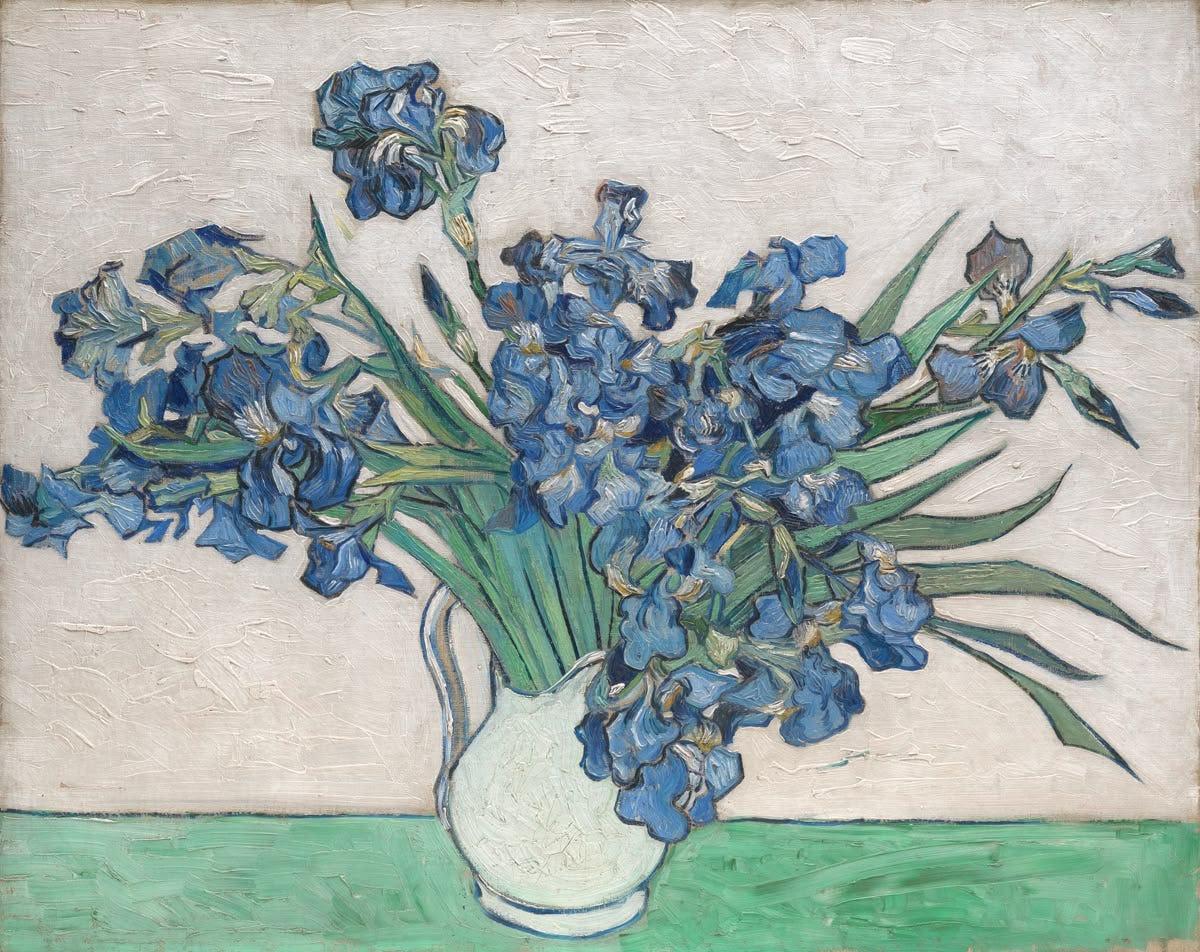
The wild iris is our narrator — speaking from beneath the soil, recalling its underground before it blooms — a period of darkness, suffering, and dormancy. Even after winter passes, it remembers what it endured. The lifecycle of a flower is like that of a phoenix, rising from its own ashes — except this wild iris retains its memory. So while birth is joyful to humans, rebirth, to the wild iris, is grave and inevitable. While nature submits to these painful cycles of darkness, changes, and renewal, we resist them — making the wild iris a model of endurance for us.
I love the emphasis on memory — something Gluck treats unusually. Humans repress pain — distracting themselves, seeking gratification, trying to overwrite their pain. Futile attempts, of course. The wild iris doesn’t bother with any of it — instead, by remembering, it gives its rebirth meaning, proving it has existed before this moment and persisted in the darkness. The continuity of life gives it its strength. We may not consciously recall every stage of our growth, but those stages live on in us, shaping how we speak and act. Even when we feel undone, the self remains continuous across its different states. Perhaps we fear death because we cannot remember what lies beyond it. And perhaps, like the iris, we too have passed through darkness before.
books
nonfiction
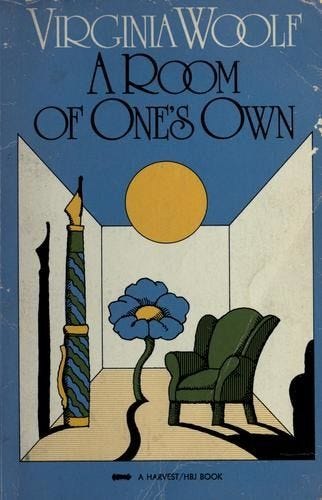
A Room of One’s Own by Virginia Woolf
I will be writing a full essay on my main January read: A Room of One’s Own — one of the best pieces of text I’ve ever read, and a thoroughly insightful and materially timeless lecture on the topic of “women and fiction.” Woolf gets a lot of hate — but I find that this hate comes from those who are unaware of their own history and the privilege of their time, that they will tell you things like “how is this relevant today” and “of course a woman needs a room to write” or “of course a woman needs to be well-fed to write.” I don’t blame them as much as the educational environments that have failed to foster critical thinking faculties in some. Woolf had many undeniable personal issues, but as a writer and literary critic, she was a genius. I read the Penguin Classics copy of this book and was baffled by Xochitl Gonzalez’s introduction, which showed a whole lot of the same lack of insight and depth I outlined above. But that’s for another essay, perhaps. If you haven’t read the book, you must. It’s a perfect candidate for a slow read.
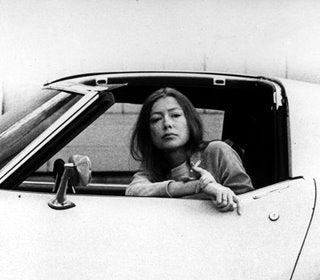
Slouching Towards Bethlehem by Joan Didion
To read Joan Didion is to venture into the addictive business of trying to understand her — her inner life, her outer life, her home, her relationships, her mind, her psyche. But she’s hard to get to know, despite being one of the pioneers of new journalism — a form of reporting in which the reporter's personal life and feelings aren’t excluded from the reportage. Yet, the more one reads her, the less one knows her. I spent the month reading her essays, her novel, and her one journal, which I’m not so sure she wanted anyone to read. She is hands down one of the greatest modern writers of all time, and the essays in this book include writing as important as precious gemstones and as sharp as a knife.
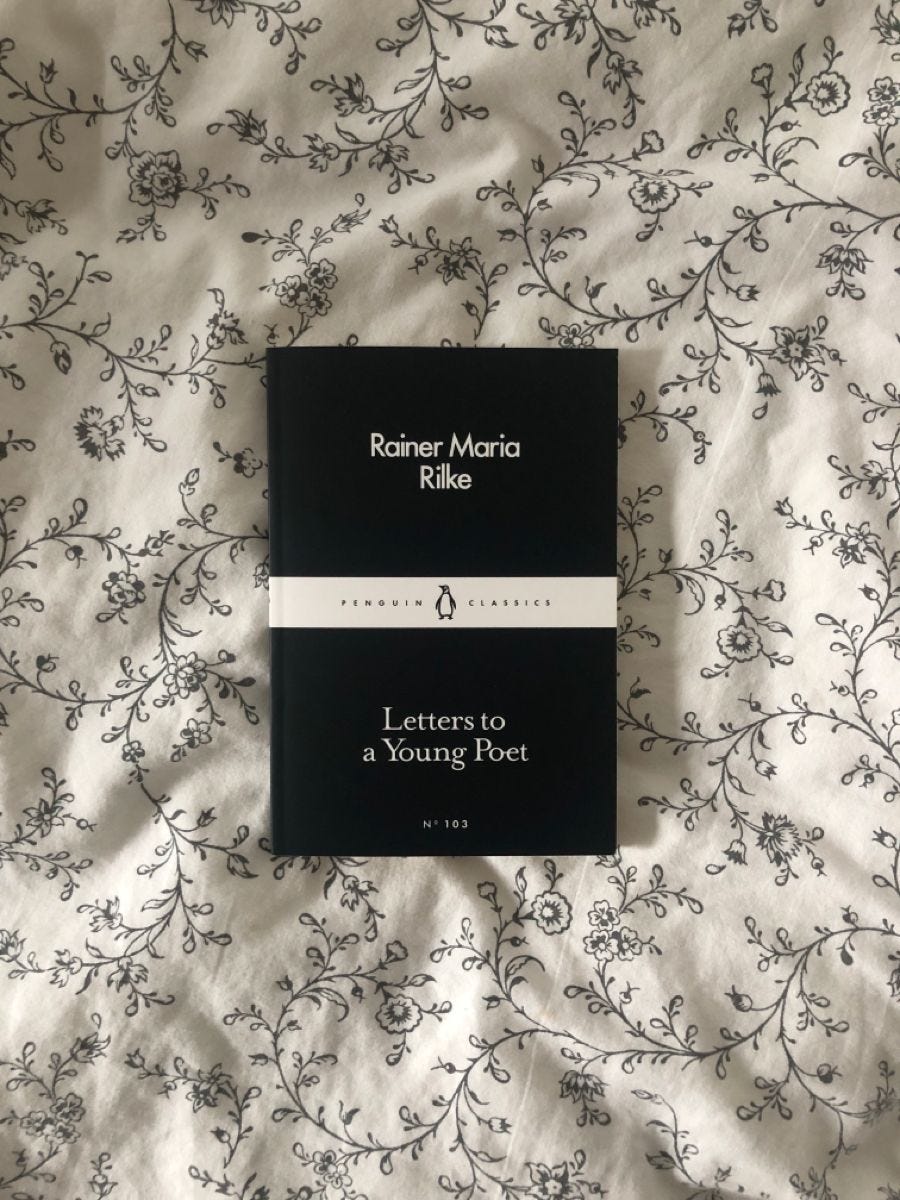
Letters to a Young Poet by Rainer Maria Rilke
Rilke’s heart, soul, wisdom, passion, and pain come from a notably itinerant life spent traveling across Europe in the early 20th century. His poetry is truly exquisite. That these letters, establishing a beautiful mentor-mentee relationship, are now a piece of literature — is likely something neither Rilke nor his mentee anticipated while they were exchanging them. Rilke is practical and direct yet compassionate and fair — and at times, his opinions are almost as strong Nabokov’s, notorious for strong opinions. Ten letters — that everyone wanting a creative life should read.
fiction
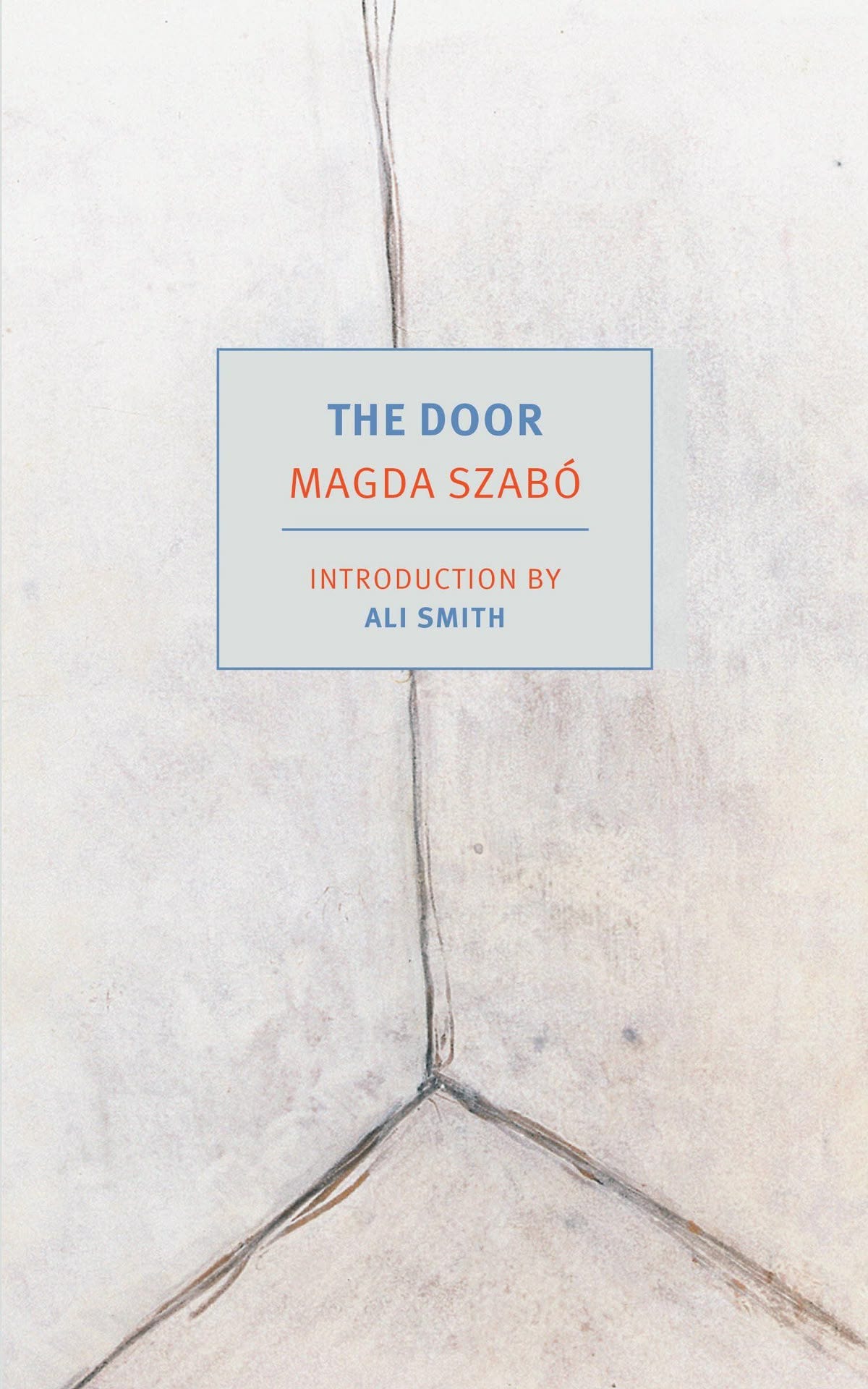
The Door by Magda Szabo
The first NYRB classic I read. I was blown away by the intimate simplicity and poignant guilt strewn throughout the pages of this book like wind through sand. Ultimately, a confession of sins committed in betrayal of trust, love, and moral responsibility, the book tells a psychological story about a complex, tense relationship between a writer-narrator and her mysterious housekeeper, Emergence. Set in postwar Hungary, the novel explores trust, power, loyalty, and guilt. The writer and reader are both fascinated and unsettled by Emergence’s strict personal rules (no one enters through her door) and her hidden past, and even as their bond deepens over time, something dark and painful looms, and a single decision by the writer leads to irreversible consequences — something we fascinatingly learn about within the first pages.
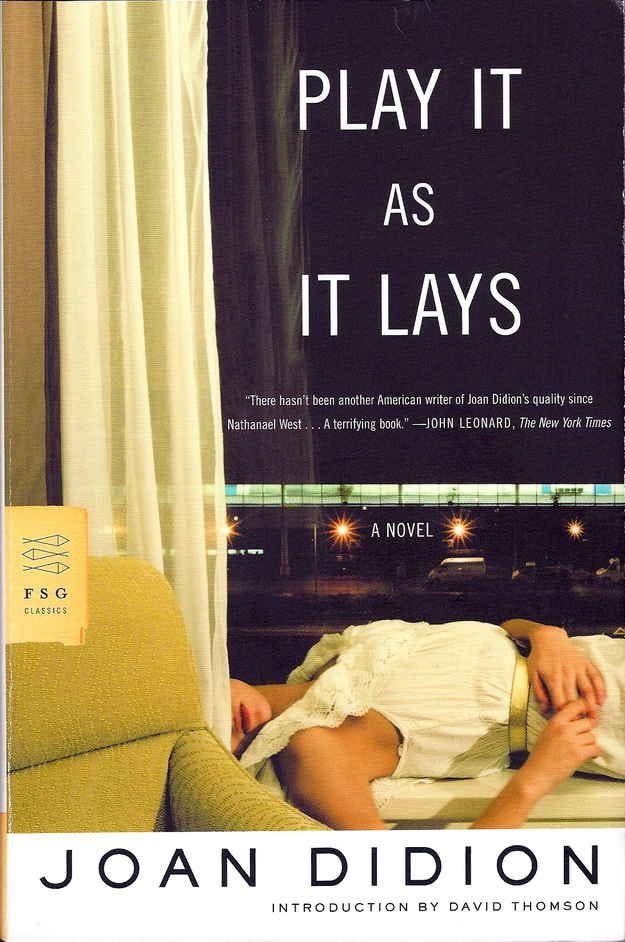
Play It As It Plays by Joan Didion
I've never finished a book this quickly in my life. In Didion’s own words, the book finishes almost as soon as it starts — without missing a beat, and it’s a work of genius. Follows a detached, emotionally numb actress named Maria as she drifts through the emptiness of late-60s Hollywood and Vegas, the chapters are short and fragmented — but each a punch to the gut. As Maria psychologically dislocates and navigates failed relationships, personal loss, and the artificial culture of fame, she confronts meaninglessness, alienation, control, survival, depression — all in a world both morally and emotionally hollow. Hard to read at times because it hits you hard in places.
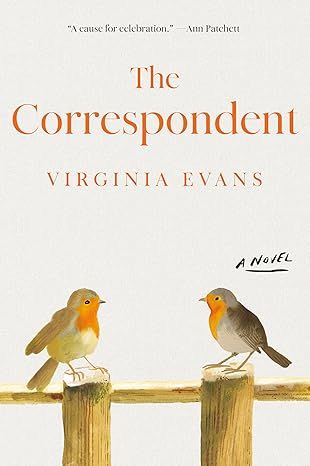
The Correspondent by Virginia Evans
I am yet to finish this book, but it’s SO WONDERFUL so far. It centers on a narrator whose life unfolds through letters, observations, and carefully controlled communication with others. Early in the book, the tone is introspective and slightly distant, focusing on how the protagonist interprets relationships rather than directly participating in them. The story seems to explore themes of perception, emotional restraint, and the gap between what people say and what they mean. I’m excited to finish — I had a whole bunch of stuff come up, so I couldn’t see it through, but I’ll try to share a mini review in the next monthly postcard.
music
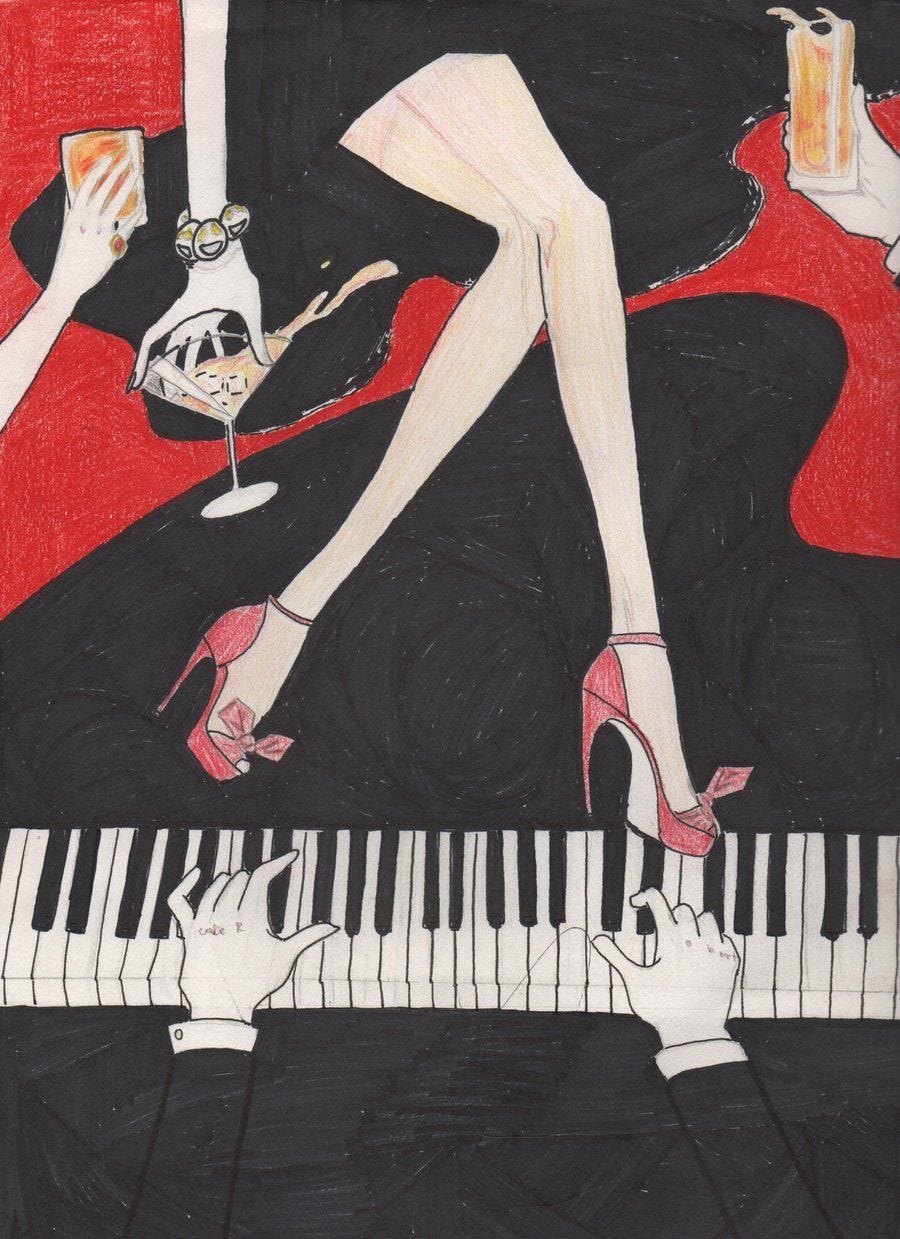
1920s Jazz
Growing out of New Orleans traditions and later intensified in cities such as Chicago and New York, jazz came to embody the freedom, exuberance, and social transformation associated with the Roaring Twenties. Throughout January, it played in the background as I worked! This one below is characteristic Cole Porter:
Midnight in Paris version:
film & tv
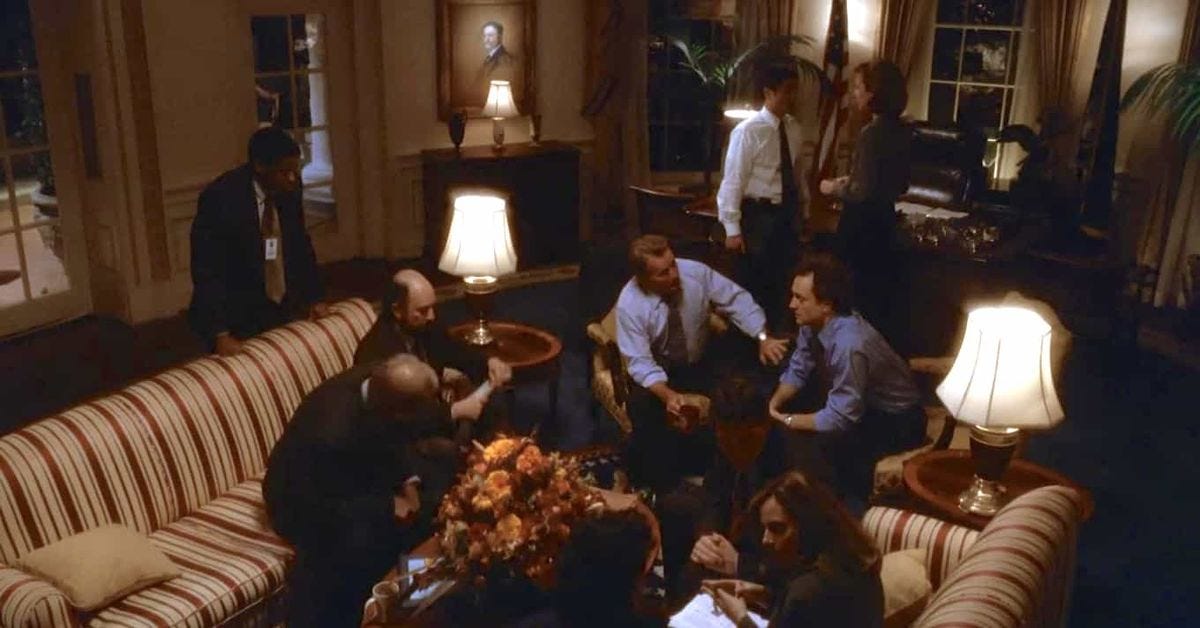
West Wing (Season 1)
One of my favorite shows on the planet, one I’m so glad to be rewatching! Season One is glorious in its introduction to President Bartlet’s White House as an idealistic yet pressured environment where policy debates, media strategy, and personal loyalties constantly intersect, using the famous Aaron-Sorkinesque, fast-paced “walk-and-talk” dialogue and episodic political crises to reveal the characters of the senior staff. There’s Josh — and his drive and pragmatism. Sam — principled and optimistic. Toby is intense and highly moral. CJ is… constantly evolving as an authority figure, and Leo (my favorite) has a steady, self-effacing leadership. And of course Bartlet — probably the most educated man of his time — an econ PhD, Nobel laureate, smart as shit, a hilarious speaker — and his bodyman and everybody’s favorite, Charlie. Rather than building around a single plotline, the season explores top-line themes of public service and ethical compromise and the gradual deepening of President Bartlet’s commanding presence, until the later episodes shift toward more personal stakes and a dramatic tonal escalation that reframes the administration’s early confidence. It is truly one of the best-written shows ever, albeit with some archaic hints that my partner and I were quick to single out: such as the way the women are written — either “badass” or “adorable” — nothing in between. A couple of characters will get on your nerves, but don’t worry about them.
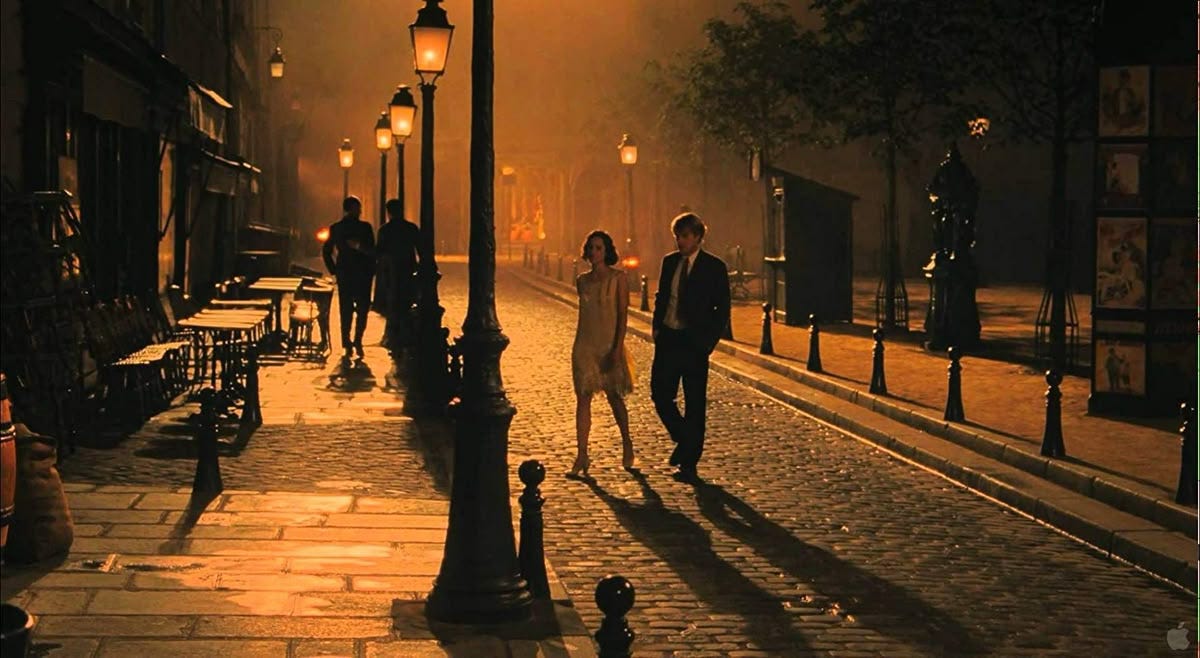
Midnight In Paris
This is my favorite movie. Unfortunately, it’s made by a complete asshole named Woody Allen. The film follows Gil, a nostalgic American screenwriter visiting Paris who feels out of place in his present-day life and becomes captivated by the city’s artistic past; through a whimsical, time-slipping premise, the story blends romance, literary history, and gentle satire as Gil encounters iconic figures from the 1920s while questioning his ambitions, relationships, and idealized view of “golden ages.” Light in tone yet reflective underneath, the movie explores creativity, longing, and the tension between fantasy and reality, using Paris itself as both a setting and an emotional catalyst. You’ll see Fitzgerald and T. S. Eliot and Hemingway and Zelda and Gertrude Stein and Dali and Bunuel and Cole Porter — and like me, if you’re deeply familiar with all their work, you’ll start noticing that their dialogue are renditions of their notable artistic contributions. An unbelievably fun experience.
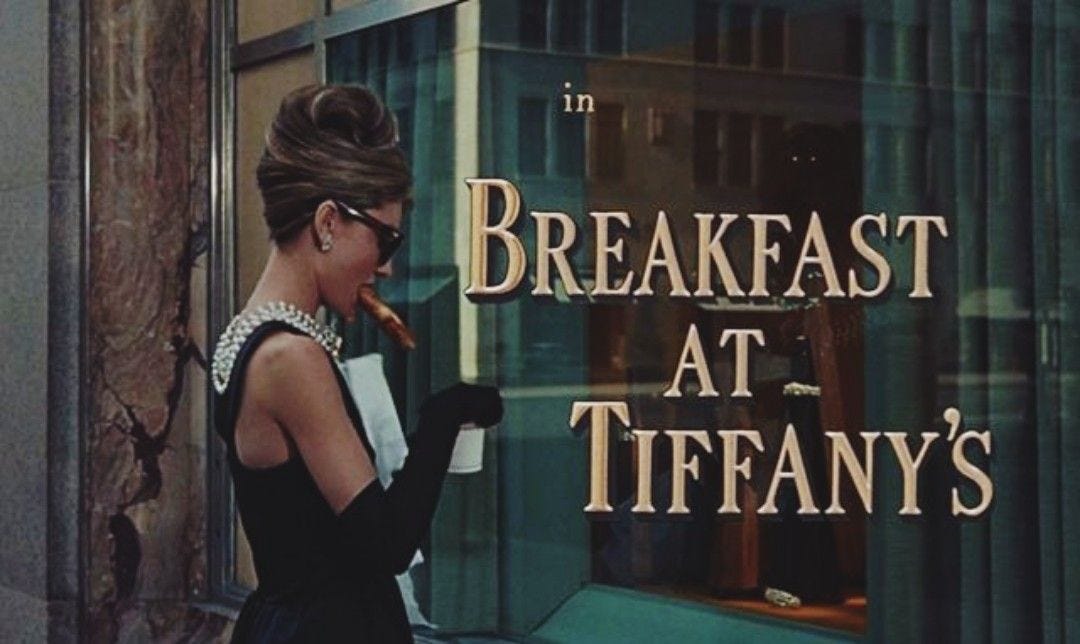
Breakfast At Tiffany’s
Follows Holly Golightly, a charming but elusive New York socialite who drifts through Manhattan’s wealthy circles while avoiding emotional attachment and financial insecurity, and whose carefully constructed persona masks loneliness and uncertainty about identity and belonging. Seen largely through the eyes of her neighbor Paul, Holly lives by improvisation — pursuing rich suitors, dismissing commitment, and insisting on her independence — yet beneath the performance lies vulnerability — with a past she doesn’t want to confront. As Paul and Holly grow closer, he begins to see through her, recognizing both her fear of belonging to anyone and her longing for stability. The story follows their uneasy intimacy as Holly resists love in order to preserve her self-invention, until circumstances force her to choose between perpetual flight and the risk of genuine connection.
comforts & favorites
Homemade Roast Chicken
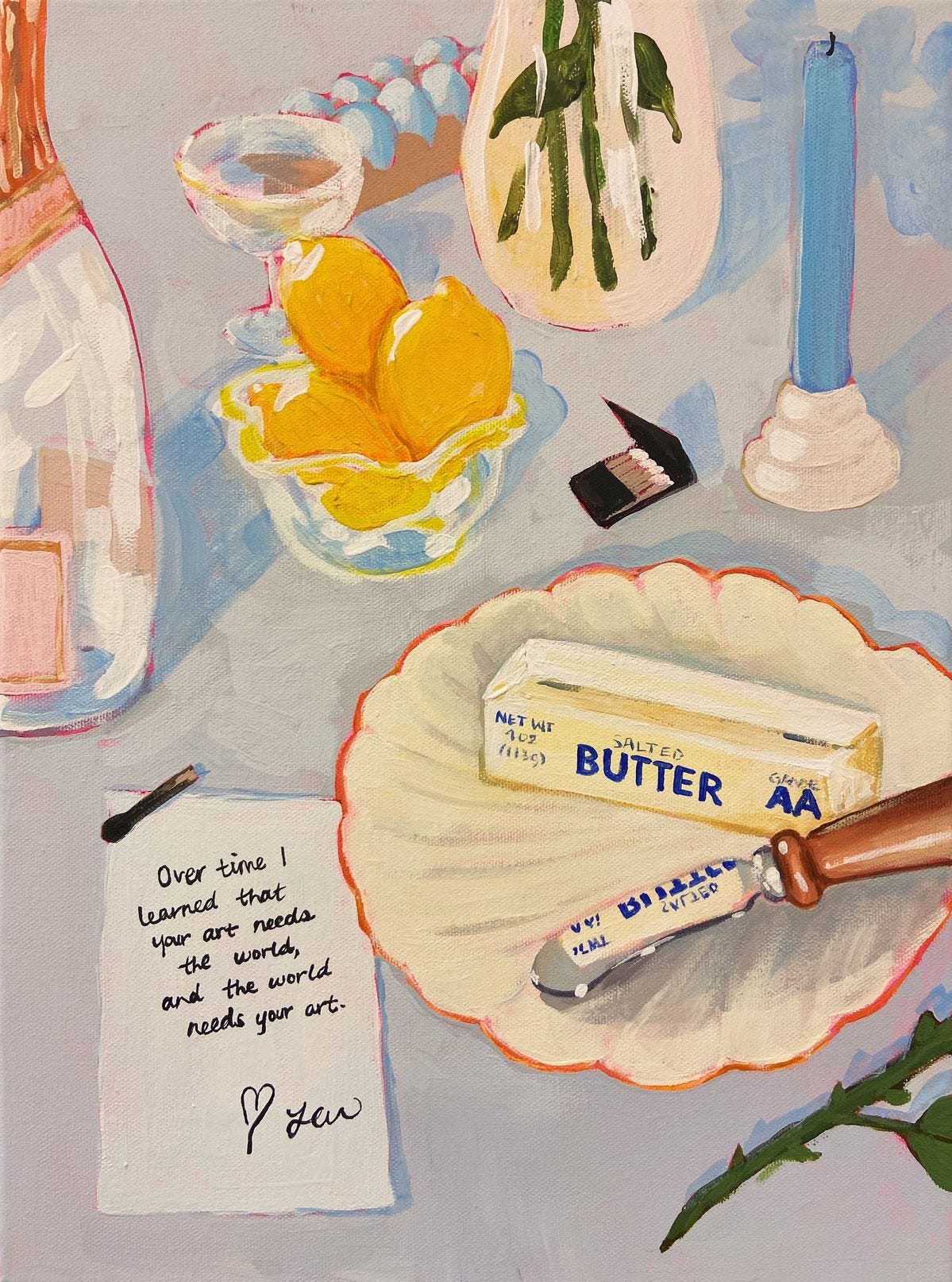
There is little in the world that tastes as beautiful as a homemade roast chicken — covered with seasoning by hand — lemons, thyme, garlic, salt, pepper inside — legs tied up — carrots and red potatoes and onions underneath. I just don’t make the gravy by adding in the flour and chicken stock — I add hot water, salt, and lemon juice — making an elegant and beautiful French jus.
Here are three legendary recipes I swear by.
Ina Garten’s Perfect Roast Chicken (I’ve made this one the most since it’s the most classic, most gorgeous simple elegance — as I said above, I don’t make the gravy but make a French jus instead).
Alison Roman’s Slow Roasted Oregano Chicken with Buttered Tomatoes
Marcella Hazan’s Roast Chicken With Lemons (I’m actually yet to cook this one but I’ve had it before).
Toasted Country Bread
Some really good bread — preferably from a local farmer’s market — wonderful with roast chicken jus.
Moleskin Classic Notebook Hardcover Black
I’ve used hundreds of notebooks since I was in middle school — and this one truly is one of the best. I started earnestly using them thanks to my girl Elle — who swears by it.
That’s all for January! Until next time.
XOXO
Tulipe

There are so many amazing recommendations here, I don't know where to begin! Thank you for the jazz music recommendations, first of all. Secondly, you've read a book I've been thinking about for a long time, "Letters to a Young Poet." I've heard that everyone who writes should know this, that it has so much to offer us, creators. I've had it on my mind ever since, but I haven't managed to get my hands on it yet. However, I read Virginia Woolf's "A Room of One's Own" a long time ago, and I think it will always be my favorite work from her. She had so much understanding and so much faith in women that I swear I get emotional writing about it. Also, Joan Didion's character—I want to know more. Her thoughts are literally like gems. Holly from Breakfast at Tiffany's is one of my favorite characters because I know what it's like to "feel out of place," when you're somewhere but you don't belong there, and it doesn't belong to you. The recipes sound delicious, but especially this toasted country bread, I love good bread and I love that it's spring already, so the seasonal vegetables will pair deliciously with it. <3
Ohh this filled me with light this afternoon!