


prelude
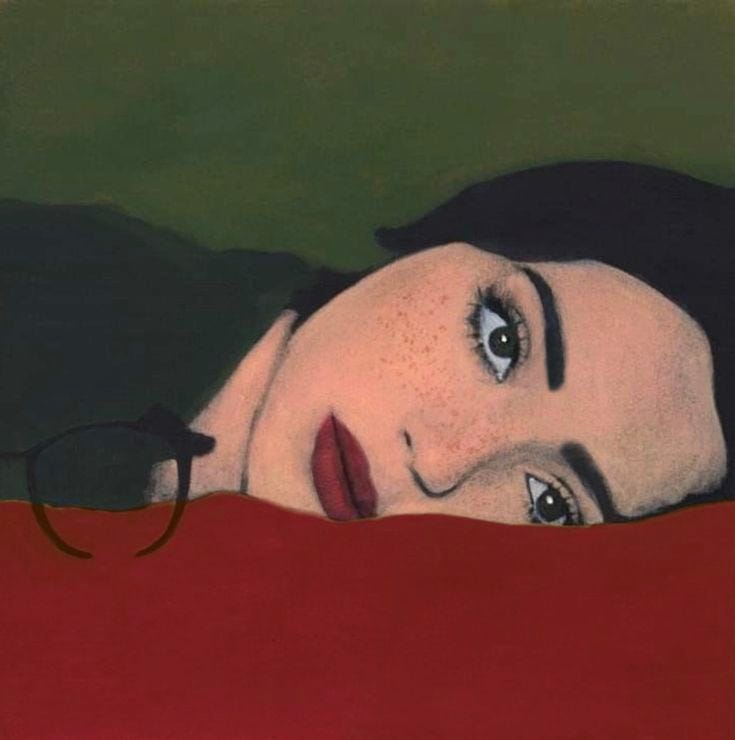
Last month, I wrote an essay about rest. It became, unexpectedly, one of my most read and most shared pieces, which is why I am now recirculating its final section here in this postcard. The full essay is a personal philosophical piece that draws on Aristotle, Bertrand Russell, and Lao Tzu, to explore the idea (echoing Aristotle) that leisure and reflection are part of what civilization is for and that genuine rest is a necessity for clear thought and composure. We resist it to our own detriment — because we’re absorbed by the idea that hard work is the only dignity, and rest must be earned. It is, in any case, allowable to lie still and gaze at the ceiling.
20 ways to do nothing:
gaze at the ceiling — no phone, no timer, no agenda
sip your tea without turning it into a self-improvement exercise
go for a walk, no step goals, no podcasts, no new music friday (leave your phone home)
lie down on your back or on your front, on the floor
look out the window
pet an animal, just because
eat a snack, and do just that, no multitasking
hurkle durkle: roll around in bed for no reason, stretch in all the ways you want
pick up an object and feel it
daydream, without turning it into a project
close your eyes and stay awake
watch steam rise from hot water (I tried this recently and it’s strangely beautiful. Highly recommend.)
start a simple chore and stop halfway — on purpose
sit in your car after parking, don’t get out right away (if it wasn’t clear already: scrolling or being on your phone is the opposite of doing nothing)
wait by the microwave as it finishes (not directly in front of it, as that can be dangerous)
make custard (pour whisked yolks, sugar, and salt into steamed milk. stir for 8 long minutes. no stepping away. vanilla after)
make béarnaise sauce (requires full attention or the sauce breaks. whisk tarragon, yolks, vinegar, salt. place atop a water bath. whisk in butter — one cube at a time)
let yourself be bored for 5 mins
listen to a song, do nothing else
rest your head in your hands, like you’re waiting for nothing
let a thought pass without following it
sit in silence with a friend or at a party (“nothing” does not need to appear quiet. you can do it even when in a crowd.)
if you’re listening to someone talk, don’t nod or prepare to respond immediately after: listen
And now, read on for a sneak peek into the rest of my December.
Read previous monthly postcards:


intertext
“my december archives”
The end of the year is never a clean stretch of time. Holidays make it difficult for plans to integrate the way you might want. Conversations stretch past their intended limits and planned watchlists are tossed out. As December ended, I read a great deal about the human psychology — less for its findings than for its history, which struck me as both rigorous and maybe, faintly desperate. People have always wanted to explain themselves and reading the records of that effort reveals the absolute strangeness of humans attempting to map their own mind. I’m interested in how culture and society shapes desire, restraint, and care — because those dynamics affect families, workplaces, and how we live together. The movies, meanwhile, were scattered. I saw what I could, when I could.
Without further ado, here are my notable archives from December:
poetry
There were three poems that stayed with me in December, one by Dorothy Parker, whom I admire. She was the wittiest woman of the Jazz Age and her clear-eyed views on love and politics made her a cultural icon. In “The False Friends,” Parker skewers well-meaning friends who promise that time will mend a broken heart but when it doesn’t, at least not by their promised window, she makes them pay for it through this verse. Two additional verses stuck with me: an unembellished poem about the resilience we derive from love — against all odds, even the universe. And one about the emptiness we carry within.
Quick note: I have been considering a daily poetry series — one short poem sent each morning — though I am not certain anyone wants this in their inbox. If it happens, it will be by invitation.
dorothy parker - “the false friends”
THEY laid their hands upon my head,
They stroked my cheek and brow;
And time could heal a hurt, they said,
And time could dim a vow.
And they were pitiful and mild
Who whispered to me then,
“The heart that breaks in April, child,
Will mend in May again.”
Oh, many a mended heart they knew.
So old they were, and wise.
And little did they have to do
To come to me with lies!
Who flings me silly talk of May
Shall meet a bitter soul;
For June was nearly spent away
Before my heart was whole.
galway kinell - on the frozen field (the paris review)
1
We walk across the snow,
The stars can be faint,
The moon can be eating itself out,
There can be meteors flaring to death on earth,
The Northern Lights can be blooming and seething
And tearing themselves apart all night,
We walk arm in arm, and we are happy.
2
You in whose ultimate madness we live,
You flinging yourself out into the emptiness,
You - like us - great an instant,
O only universe we know, forgive us.
3. eugenio montale - “people talk and talk more…” (the pairs review)

People talk and talk more
about black holes.

I believe the blackest hole
is the one we inhabit,
and that maybe someone outside it
wonders if in here there exist
beasts with two legs or four
or no beasts at all, and that nobody
even mentions plants or flowers.

—Translated from the Italian by George Bradley
books
December’s book haul was a secondhand collection almost entirely from the psychology aisle of my favorite used bookstores. I found two rare Freuds, a Foucault, and a Carl Jung. The sharpest thing I read that month was a collection by French journalist Emmanuel Carreré, whom I read over Christmas. I also picked up Anaïs Nin’s published diary after seeing her repeatedly referenced last fall (like by Nava Atlas).
Of these books, I’ve read eight so far. I’m glad to own the rest and will return to them when the mood strikes. Each month I tend to read one or two books closely, then sample chapters from several others. It keeps my reading life interesting and varied. I rarely read only one book at a time — at least not since Harry Potter and Twilight. Oh yes, I read those — I love my classics but as a teenager, I was a passionate patron of the zeitgeist and maintain that habit to this day. While my reading sensibilities alter every year, I pay attention to what’s circulating. Books moving through the culture say something about the moment we are in. Granted, time now doesn’t allow this as often as childhood did.
power and the psyche
civilization and its discontents — sigmund freud
Written in 1930, this is one of Freud’s most important works — it’s been interpreted and reinterpreted and praised and hated. In it, he examines how civilization formed, how it shapes human life, and how awareness of death influences culture. In trying to answer why modern life produces guilt, dissatisfaction, and unhappiness, he argues that civilization depends on repressing desire, and that this repression inevitably turns inward as anxiety and aggression.
the problem of anxiety — sigmund freud
Changing his mind, Freud rethinks anxiety and its relationship with repression, arguing that anxiety in fact is the cause of repression, as the ego represses threatening impulses to avoid the anxiety they would cause. Many of these books dating back to the 1900s and before are now extremely scarce and expensive so I’m lucky to have found a used copy for cheap!
jung’s life and work — c. g. jung and aniela jaffe
I’m yet to dive into this but this excerpt from the book, published by Harper’s, struck me. I write about it in my list of best essays from 2025. In this book, interviewed by his assistant, Jung speaks about his life’s work, his encounters with figures like Freud, William James, Einstein, and H. G. Wells, and what shaped Jungian psychology — the collective unconscious, archetypes, anima and animus, the shadow, as well as religion, the fate of the West, karma, and the afterlife. People really do swear by this book.
the nature of human aggression — ashley montagu
The author rejects the fashionable idea that humans are inherently violent and instead offers scientific evidence that aggression can be managed. I haven’t read it yet, but I’m curious to see how he makes the case.
desire and form
passion: an essay on personality — brian vickers
A historical and philosophical study of passion as a shaping force in personality, I found this book striking. The author examines modern notions of human nature, especially our desire to be accepted by others. It’s a notable book for readers of philosophy and for anyone interested in major modern thinkers.
the history of sexuality, vol. 1 — michel foucault
A classic work of social theory about how power operates in modern societies — including how public conversations shape private life. He is a striking writer and thinker — known, notably, for publishing some of his work anonymously because he believed authorship shaped how people read. After encountering several of his essays, I wanted to go deeper, and this book was repeatedly recommended.
aesthetics of sexuality — romana byrne
Arguing against Foucault's assertions, it’s really a book about how culture shapes what we find beautiful, meaningful, or compelling — not just in desire, but in art, relationships, and everyday life.
fiction and first person
97,196 words: essays — emmanuel carrère
I’m simply blown away by this man. His reportage and moral inquiry and the coldness of his prose will leave you speechless as he reports on belief, obsession, crime, and the uneasy boundaries between the self and the world. The first section comprises of three crime stories he reported — it’s left a ripple effect in me.
the diary of anaïs nin, vol. 1: 1931–1934 — anaïs nin
A major literary diarist of the 20th century — important to understanding modern feminism, creativity, and women’s interior lives. I found this book on chicgirlmoment’s book list.
all about love — bell hooks
I’ve been meaning to get this book all year. hooks argues that love is an ethical practice that requires care, accountability, and how we treat one another in families, communities, and public life — not fantasy or domination.
the bell jar — sylvia plath
This iconic book of psychological suffocation and social constraint as a young woman collapses under the pressure of prescribed roles, ambitions, and unlivable expectations. I have always avoided this book as I knew the ending, but after repeated exposures to it last year, I ended up joining forces with the fig tree.
my year of rest and relaxation — the icon Ottessa Moshfegh
I first saw this circulating thanks to emma, who has impeccable taste. A brilliant dark comedy about a young woman so exhausted by life that she sleeps for a year — exploring that familiar urge we have all felt to opt out from the relentlessness of the world, numb oneself, avoid pain, wait until life feels bearable again. Moshfegh really widens the scope of the book to critique modern life’s nonstop bad news and over-reliance on medication — fighting back this idea that maybe, stepping back is a necessary stage of survival and once in a while, we can stand to stop amortizing the courage of “being awake.” It won’t kill us.
“Think not of the books you’ve bought as a ‘to be read’ pile. Instead, think of your bookcase as a wine cellar. You collect books to be read at the right time, the right place, and the right mood.”
— Luc van Donkersgoed
films
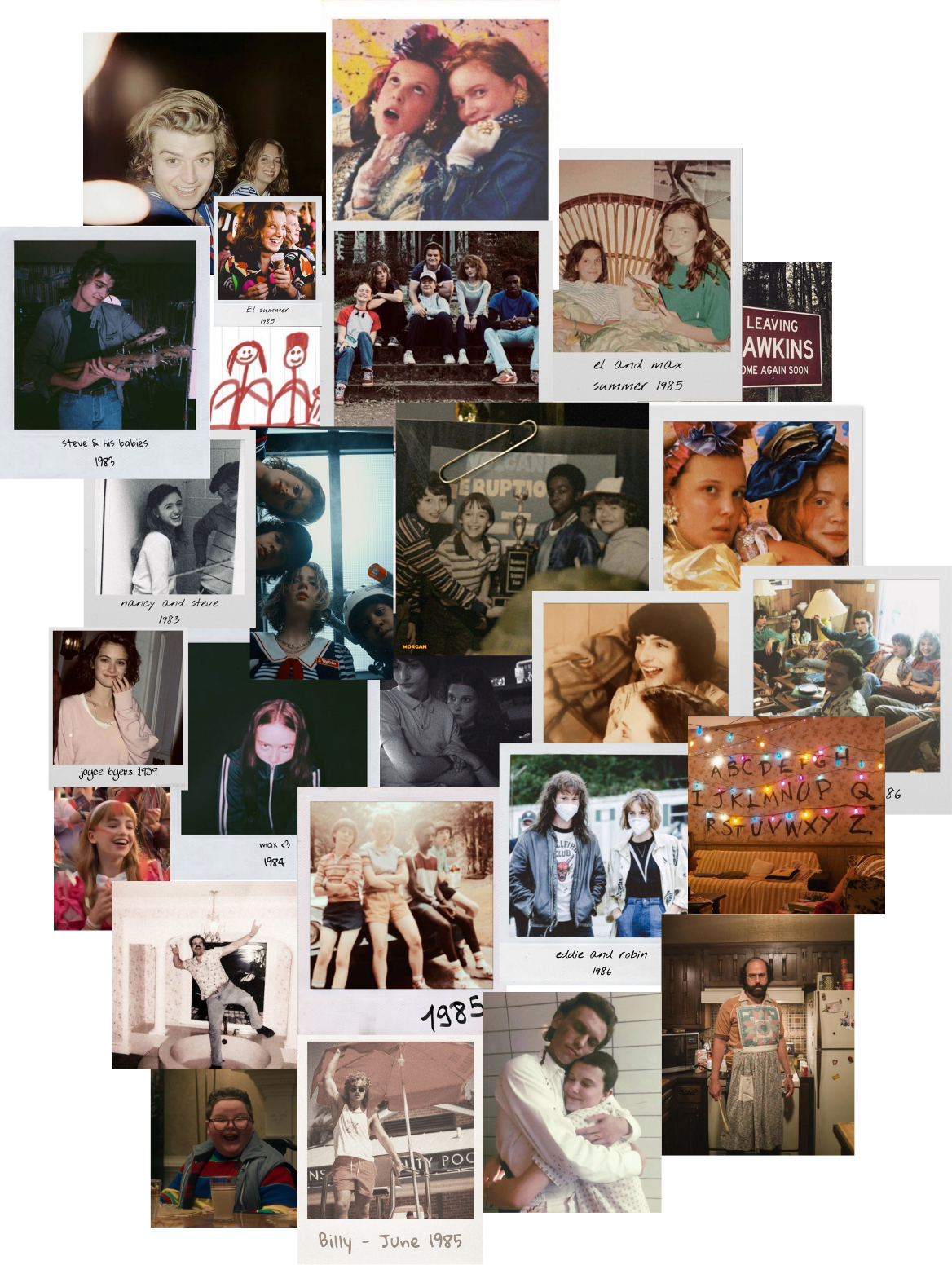
It was the holidays, so we decided not to think too hard and simply watched whatever surfaced on Netflix. Still, this became our unofficial Stranger Things month — a show of which both my partner and I are fans, so you will see this depicted in the playlists and comforts sections below.
a house of dynamite
An unknown enemy launches an intercontinental ballistic missile shooting straight for Chicago and they have very little time to figure out what to do. It escalates quickly as it shows what it look like for our fragile systems to come together to prevent catastrophe — and how quickly they can fail. This kept me on the edge of my seat but ended abruptly, not in the tidy way a thriller often does, but in something closer to disruption, which felt intentional, though not sure it was entirely satisfying.
wake up dead man
This is the most serious, most mature, most solemn, most sombre Knives Out movie yet. It’s a very good movie and I loved Josh O’Connor. It’s more noir, more Agatha Christie, and towards the end, a less playful caper. It genuinely examines faith and guilt seriously, which gives it a weight the others avoided. Still a Knives Out movie — just a darker one.
the woman in cabin 10
This was awful.
stranger things series finale
Living in Los Angeles, we were able to see this in theaters, which felt like a rare privilege. I’m not ready to analyze it yet, I’m still reeling, and need to rewatch it first — but emotionally, it largely worked for me. It was like watching The Deathly Hallows: Part II: lawed but you’re overwhelmed with caring more about what’s happening to your people — enough that criticism seemed beside the point in the moment. I’m just so happy I got to experience this. We deserve it — after the long cultural dearth that Harry Potter left behind. It felt good to have something to care about this much again.
postscript
comforts
collage & mood boards
The last time I made something remotely resembling the collage below was in anticipation of the release of Harry Potter and The Goblet of Fire. I was deep in it then — refreshing browsers again and again to find out who was going to be Cedric, who was going to be Cho, who was going to be Krum and Fleur, who were going to be Parvati and Padma Patel and what the hell were they going to wear (what they wore was atrocious, btw). I remember collecting news clippings, printing out rare photos of the cast members, making playlists, and creating scrapbook versions of Advanced Potion-Making by the Half-Blood Prince or The Standard Book of Spells by Miranda Goshawk. I drew sketches of The Sorting Hat, and four house emblems of Hogwarts, and made my own Hogwarts class schedule should I be able to borrow the Time Turner from Dumbledore, a shopping list for my own trip to Diagon Alley, and dedicated notes on how they were going to destroy all seven (known) Horcruxes. Well, I was a preteen — I can forgive her and pat her on the back for her dedication. She would have loved being a teenager during the Hawkins-era but she was already sliding into her 20s, and long lost her time to other things, such as, the coveted corporate life. But why not indulge a little bit into the nostalgia of my own life in paying tribute to a nostalgic show. It felt right.
tapes
There’s Kate Bush, along with several Kate Bush remixes. There are also scores and soundtracks from the series, as well as “End of Beginning” by Djo. I’m so sad the show ended. Probably my favorite tv score of all time.
For Christmas, we listened to the classic playlists on Spotify. Trans-Siberian Orchestra’s rock version of the Christmas Canon song always makes a comeback for me during the holidays — I think I Shazammed it from one of the Christmas episodes of The Office (U.S.) one time and it stuck. And of course, Mariah Carey. She came up in our trivia recently as one of the very few artists to have appeared on the Billboard charts across four different decades, which is pretty wild.
The rest of the month, there was a whole lot of ‘80s throwbacks, probably in subliminal preparation for Stranger Things Season 5: ABBA, Europe, Lynyrd Skynyrd, Madonna, Michael Jackson, Boney M., Depeche Mode, and one of my favorites, Modern Talking. There are also some random ’90s and early-2000s throwbacks mixed in — Muse, Enya, Eminem, and Panic! at the Disco. I have no idea how they snuck in. I couldn’t tell you.
I also have “Lilith” on there, the collaboration between Halsey and SUGA of BTS, an old Hindi favorite called “Saiyyan” that I played for my partner one night before bed, and I see that I have “Cancelled!” on there for some reason. It makes sense. I find that song’s composition oddly addictive when the mood strikes. Full playlist below.
Postscript:
Thank you for reading the slow philosophy and helping it grow in ways I never expected. This work has remained free, ad-free, and fully human — sustained by readers who’ve followed it closely and pass it along to friends. If something here has added a small measure of meaning to your days, the simplest way to support its ongoingness is to share it with someone. Word of mouth has been its biggest engine, and I’m deeply grateful for it.
I’d love to hear from you.
Did you watch the films I listed? Read any of the books?
That’s all for now. See you next time.
Best,
Tulipe

on the shelf
dear jane books is my bookshop. all books linked are directed through it. proceeds support independent bookstores.
A gentle manifesto that reframes rest as an ethical stance rather than an indulgence
Tastes I’ll definitely check these out. I love the idea of collecting books like wines. I feel like I do this but I felt guilty over the overconsumption of it. Yet I do find myself finding things in my collection that I really needed and they are there at the right time.