

ophelia, corrected
Shakespeare’s heroine who deserved a deeper reading — on misread women, pop mythmaking, and why reading well still matters.

The lyrics:
“The Fate of Ophelia”
The Life of a Showgirl
Written by: Taylor SwiftAll that time
I sat alone in my tower
You were just honing your powers
Now I can see it all (see it all)
Late one night
You dug me out of my grave and
Saved my heart from the fate of
OpheliaKeep it one hundred
On the land, the sea, the sky
Pledge allegiance to your hands
Your team, your vibes
Don’t care where the hell you been
‘Cause now you’re mine
It’s ‘bout to be the sleepless night
You’ve been dreaming of
The fate of OpheliaThe eldest daughter of a nobleman
Ophelia lived in fantasy
But love was a cold bed full of scorpions
The venom stole her sanity
I’ll stop here.
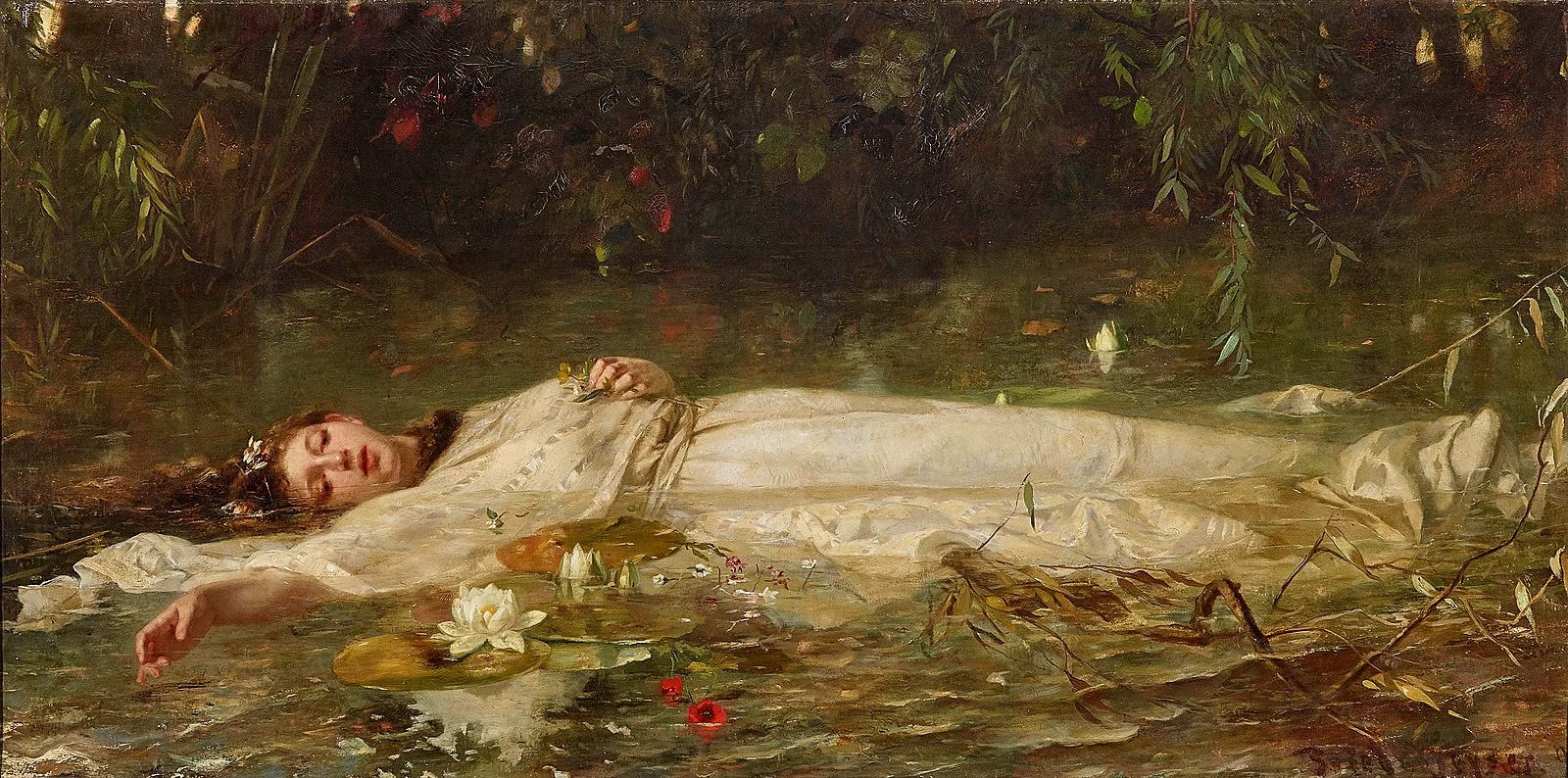
Ophelia is not the eldest daughter.
She’s Polonius’s only daughter, and youngest child. Ophelia had an elder brother named Laertes, who would be Polonius’s eldest child.
Ophelia never sat in a tower — that’s Rapunzel.
You could argue Taylor Swift is just referring to the general idea about princesses being stuck in towers and princes coming to their rescue — but that only makes the Ophelia reference more absurd as that was not her story.
Ophelia didn’t live in a fantasy — that was Juliet.
Did anyone on the TS team bother to read the play whose heroine they are borrowing as the veritable subject of their song? Even the perfectly acceptable No Fear Shakespeare version of it before you decide to turn Desdemona into a potato chip?
Ophelia is among Shakespeare’s five greatest heroines. She stands beside Lady Macbeth and Cleopatra in stature, rivals Cordelia and Desdemona in purity, and even beats Juliet at it. She’s also Hamlet’s girl — Shakespeare’s most iconic hero.
There are numerous ways one could more deeply invoke Ophelia into poetry and songwriting. Her image is timeless and tragic.
But what are these random words?
I have enormous respect for the singer but we should be allowed to dive into the glaring issues with this song’s lyrics — as well as the broader Shakespearization of Taylor Swift by our generation.
Is Ophelia really the best candidate for a symbol of sexual awakening and desire?
There’s debate about Ophelia’s age because there’s no direct textual or numeric evidence of whether she is a preteen or not but we have enough to go off to make an educated guess: she’s referred to many literary critics as a “child-woman,” someone not yet fully formed emotionally or intellectually. When her father orders her to reject Hamlet, she instantly goes:
“I shall obey, my lord.”
Ophelia (Hamlet, 1,3,136)
She’s 13 at worst, and 16 at best.
She is infantilized by the men in her life and exists within a patriarchal world. Her only moment of speaking freely is when she turns mad after Hamlet accidentally kills her father, and grief swallows her whole. Her drowning is not directly shown on stage — we only hear of it after from Queen Gertrude, in one of the most haunting passages in all of Shakespeare.
After after dad Polonius’s death, Ophelia loses her grip on reality and wanders through Elsinore, singing broken songs of death, love, and betrayal. Her father is gone. Hamlet’s gone mad. Her brother, Laertes, is far away. She goes to a brook to hang flower garlands on the branches of a willow and when a branch breaks, she falls into the water. Her clothes billow and keep her afloat for a moment. And in that eerie calm, she sings but she makes no attempt to save herself as the weight of the garments pulls her under.
Later, achingly, Hamlet says at her grave:
“I loved Ophelia. Forty thousand brothers
Could not with all their quantity of love
Make up my sum.”Hamlet, Act 5
That line breaks your heart because it comes too late.
Is Ophelia, given her story, age, backdrop, really the best candidate for a symbol of a “showgirl” — a symbol of sexual awakening?
Is “sleepless nights” and sexual intimacy with a man truly the antithesis of Ophelia’s fate? Is Ophelia, likely a repressed preteen whose world collapses after a stock of tragedies, not just romantic tragedies, really the right person to use as backdrop for complete female redemption through “male love?” Are we resolving the innocent and silenced-by-society Ophelia’s tragic and might I say poetic death through the grossly simplified concept of being loved “right” by some dude resembling the likes of James Marsden in Enchanted? Where do we people get off with saying a Viking-era teenage girl with no self-actualization wrecked with grief and pain really just needed to get laid? Instead of the river, fall into bed, live to tell the story — and you have been saved from The Fate of Ophelia? Is she a caricature?
Flattening Ophelia’s tragedy into an odd, symbolically incoherent metaphor for love and lust, which is not what she was — is jarring.
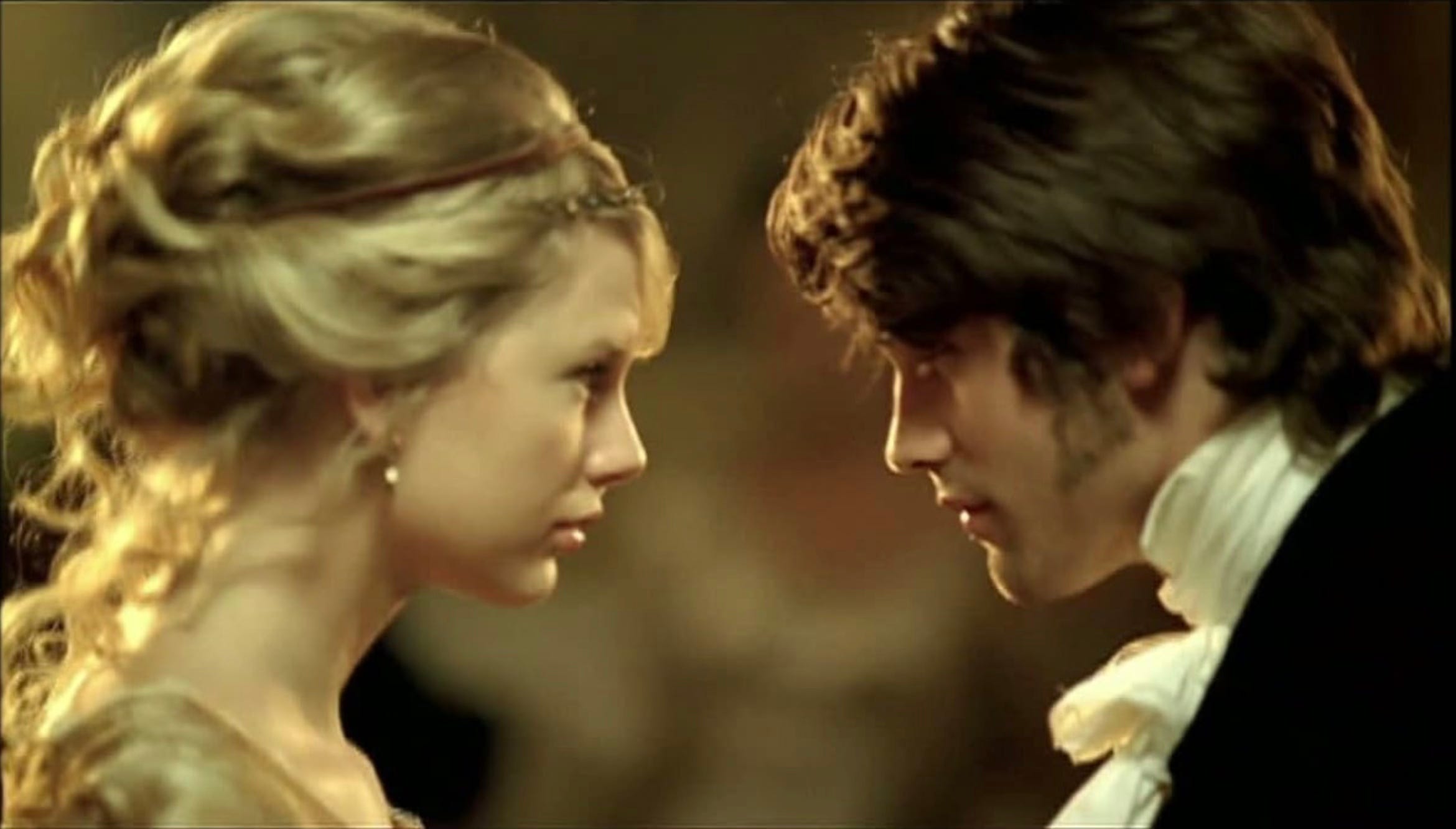
The case of “Love Story” (2010) and why this wasn’t an issue then
“Love Story” doesn’t reference Romeo and Juliet the Shakespeare play so much as the cultural shorthand the play has become. That one just borrows from tropes — the young, star-crossed lovers who die for infatuation amid family feud. So it didn’t seem like a big deal. This is what adaptation scholar Julie Sanders calls recontextualized appropriation: the highbrow source lends symbolic capital to the new work, and in return, the new text democratizes the original (or in this case, the tropes borne out of it). It’s actually harmless. Later generations can’t experience the past firsthand so artists sourcing high-brow work allows them to inherit cultural memories they did not live through (as Marianne Hirsch articulates in The Generation of Postmemory, 2012). Taylor Swift, like many artists of her generation, channels this kind of postmemory. That’s not a terrible thing at all especially for a generation increasingly declining in the critical and linguistic study of the humanities.
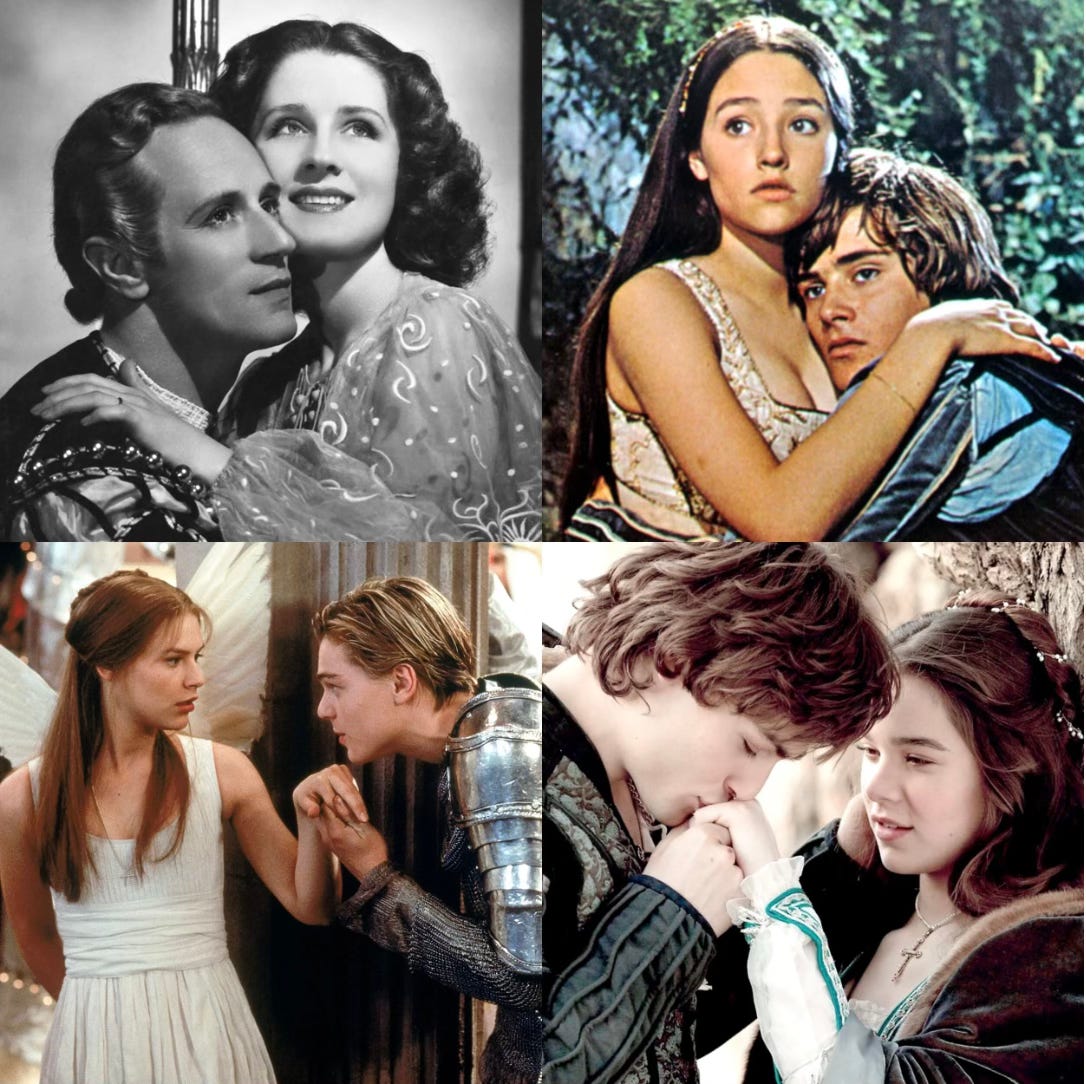
Other post memorial inheritances
Lana Del Rey - Norman F**ing Rockwell! - “hope is a dangerous thing,” “happiness is a butterfly” — inherits Sylvia Plath and Emily Dickinson.
Hozier’s “Francesca” — Dante’s Inferno Canto V.
Hozier’s “De Selby”— Irish author Frann O’Brien’s novel The Third Policeman. Hozier is Irish.
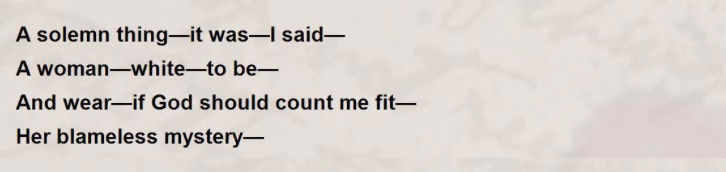
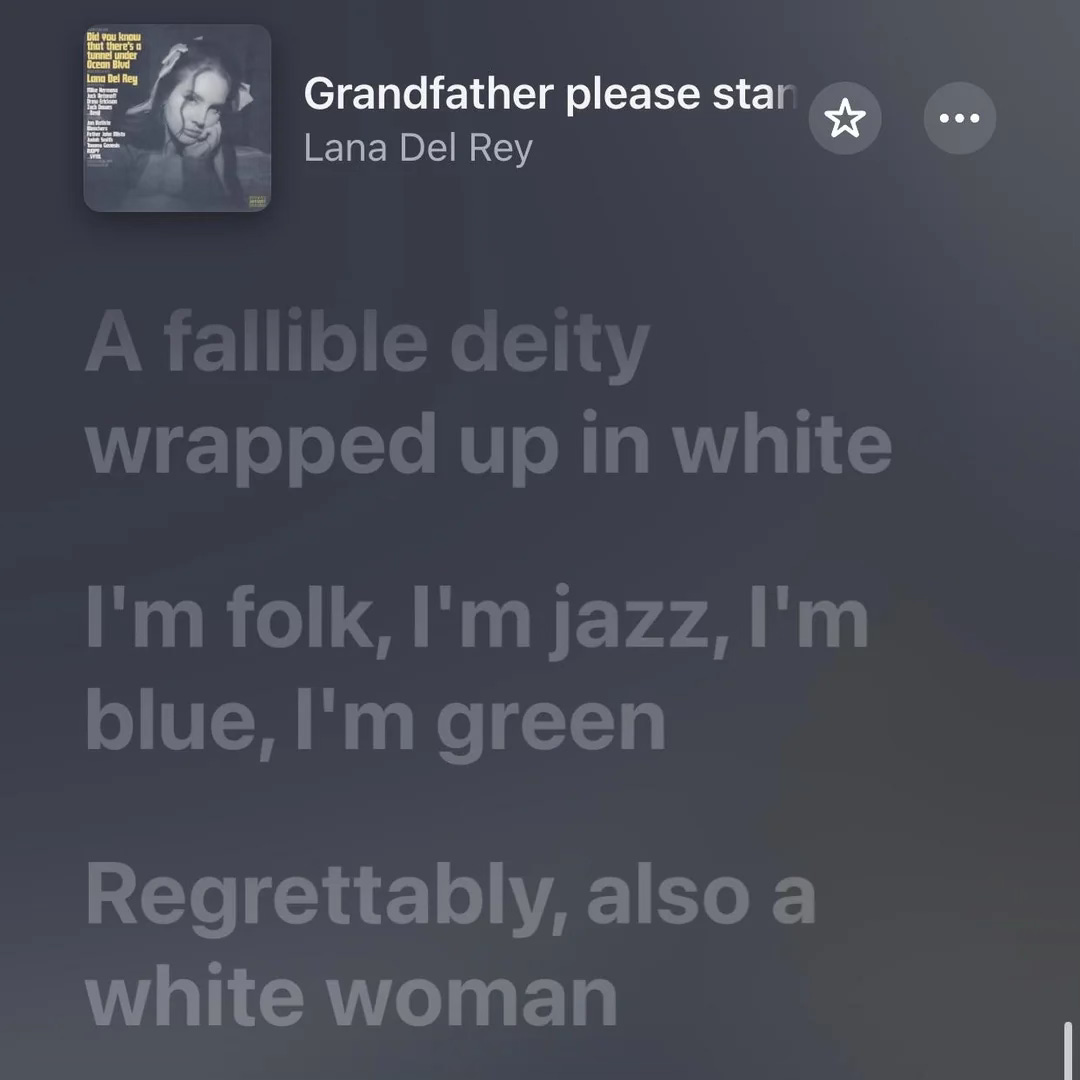
But what Taylor Swift does, in Ophelia’s case, is wrongly transform the lore in a way that appears to be an accurate and empowering portrayal to kids who’ve never read Shakespeare. And so, I mourn for those who, thanks to Taylor Swift’s cultural power, will now believe this is the rightful modern take on one of literature’s most tragic heroines.
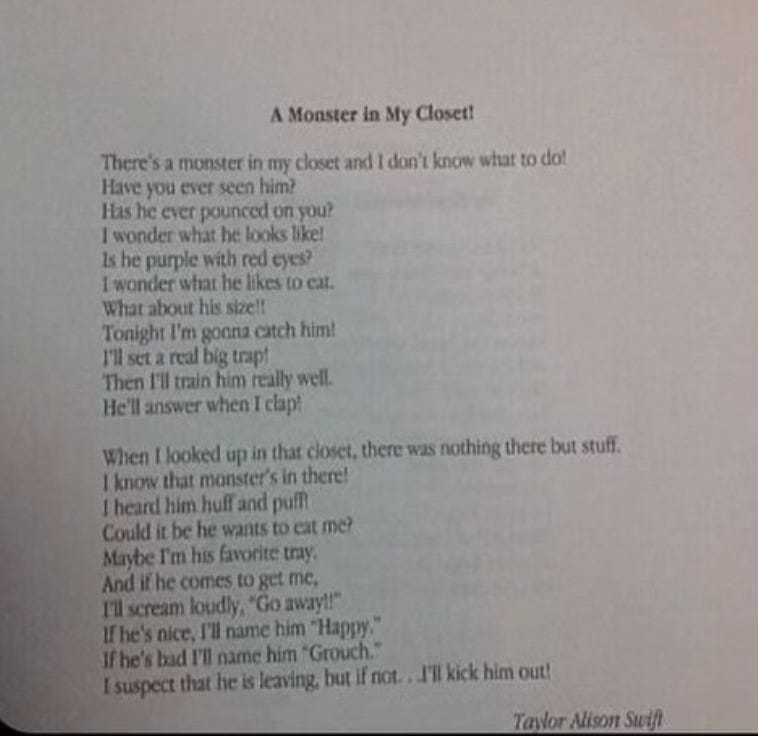
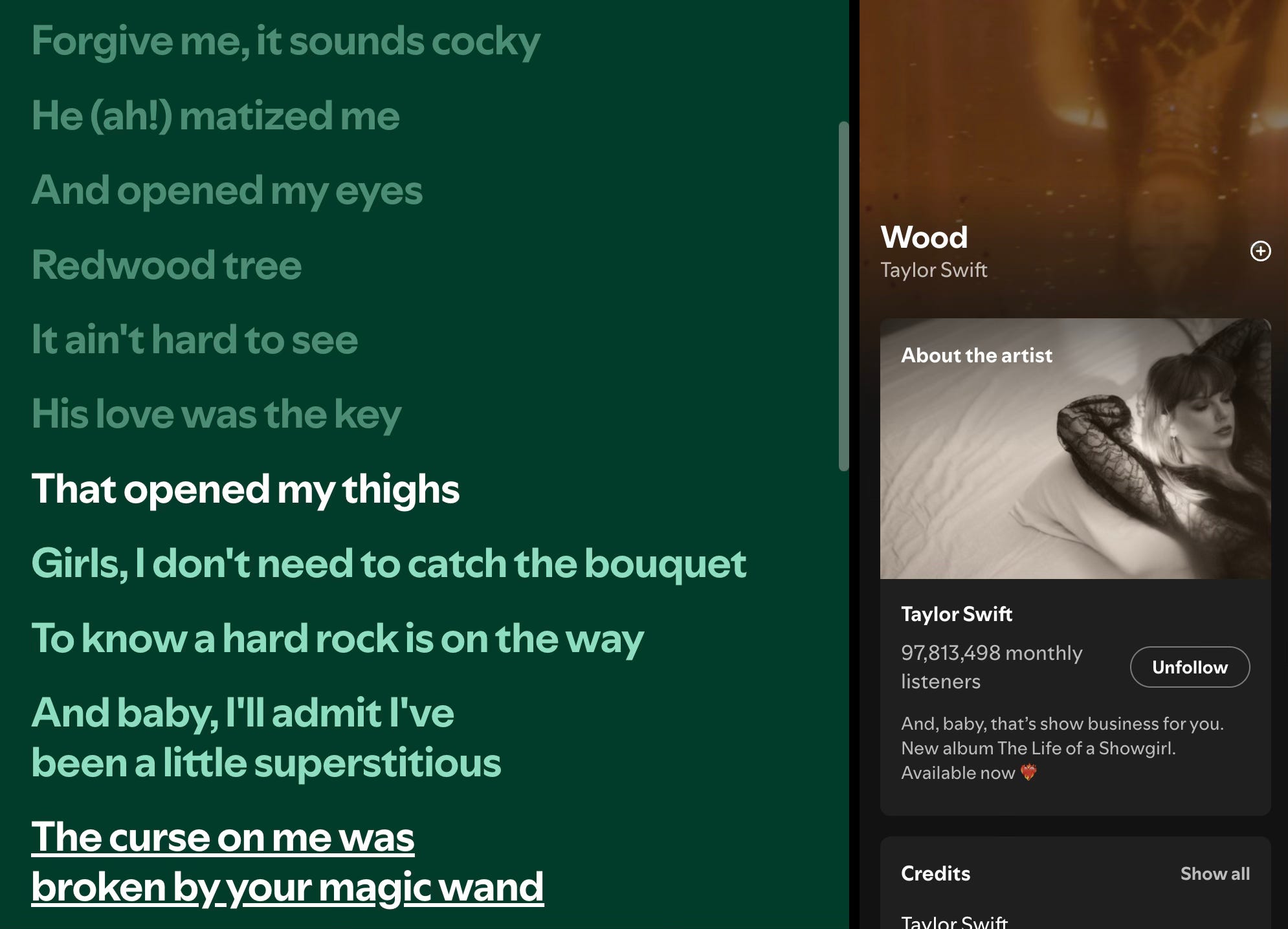
Her lyrics invite close reading. Fans hunt for clues, trace Easter Eggs, and connect themes across albums. She may have turned parasocial fandom into collective study — and that’s a genuine achievement. Pop too is meant to be fun, fleeting, and even ridiculous. That’s its beauty. It doesn’t need to make us see beyond ourselves like works of literature might. Lana Del Rey, Beyoncé, and Hozier also borrow from literature — but none of them make claims to be our English teachers.
There’s been a lot of backlash around her calling herself an English teacher — and after hearing this song, I finally understand why this metanarrative is an issue.
There’d be no problem with the mishandling of Ophelia to be used as a wink at her fiancé’s sexual prowess for a pop songwriter and an unmatched brand architect. But to want to be a literary figure, the Shakespeare of our generation — is where things start to wobble. Which poet, truly, only refers to past poets and turns them into caricature?
With folklore and evermore, this self-fashioned myth of poet and the English teacher of the internet age crystallized and maybe even felt earned. But with this song, that title now seems bizarre.
Many great artists have had what one would call lukewarm albums, even those with the successes of The Life of a Showgirl. Bob Dylan’s Self Portrait famously prompted critic Greil Marcus to open his review with, “What is this shit?”
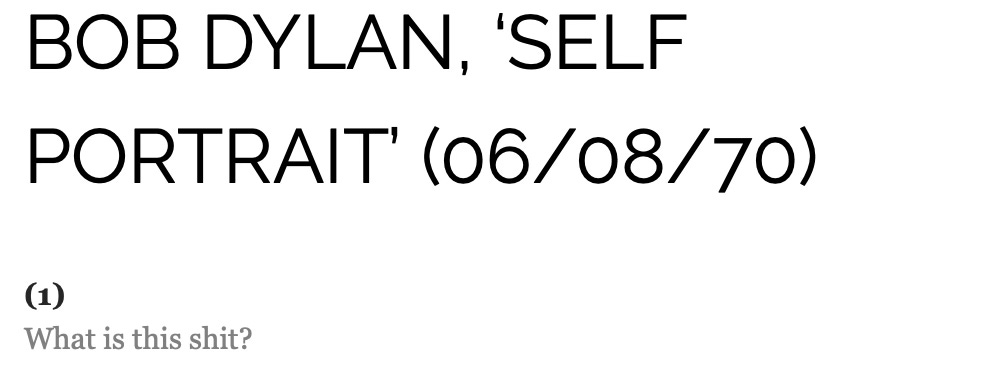
But I do think people have been fair to Taylor Swift. When The Tortured Poets Department came out, no one claimed there was something fundamentally wrong with Taylor — just that it wasn’t her best. That’s what I said, too. She was still coasting on the wave of Midnights for me, and it didn’t really matter that this one didn’t connect. But very rarely do I come across an artist’s new work and start questioning things this deeply. Maybe this Substacker is right: “It’s Not A ‘Bad’ Album, You’ve Just Forgotten Who Taylor Swift Really Is.”
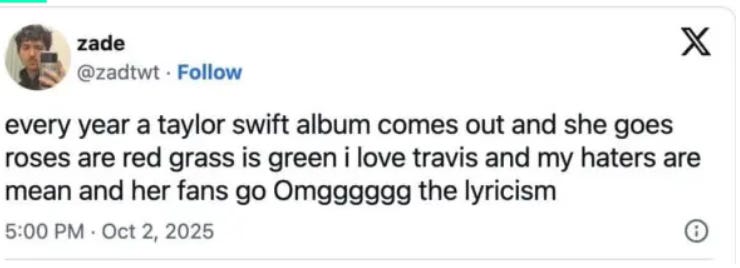
She said in an interview that she’s been dying to release an album that shows her fun side where she just jokes around cheekily. I actually do get that — she should not have to box herself into one category. She should be able to write a fun, party album.
Artists evolve. Adele released Hello in her late twenties, reflecting on regret and growing up. Beyoncé’s Lemonade honored her father and reimagined her marriage through myth. Even Justin Bieber, in Lonely, looked back on childhood fame with an adult’s clarity. We all loved them for their evolution.
But when someone that powerful rewrites a literary figure like Ophelia the way she was written in this song, millions will inherit the wrong myth. When you’re a famous person with lots of power, you can influence the minds and in fact, education, of young people.
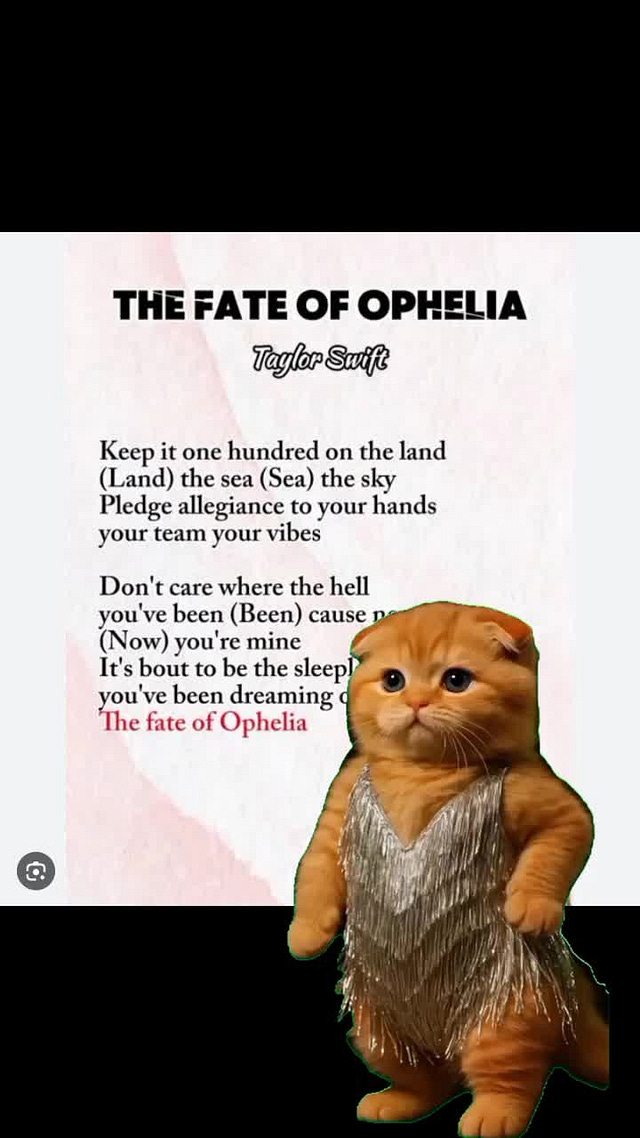
I sit here in my tower and ask the world to hone your power and please kindly not let this incorrect mythology of Ophelia spread.
 Tiktok failed to load.
Enable 3rd party cookies or use another browser
Credit where it’s due: Max Martin and Shellback did a solid job with the music composition of The Fate of Ophelia — the song, albeit its unfortunately bizarre lyrics, is catchy!
stop nodding along: dare to disagree about art

i’ve been hearing lots of stories about people having issues with criticizing taylor swift’s music — and many a times, i’ve talked to people who have issues with any criticism of any art whatsoever —
To the lovers of literature, this is apt.
Amazingly written and legit makes you question a lot of things because the topic has been researched thoroughly by the writer.